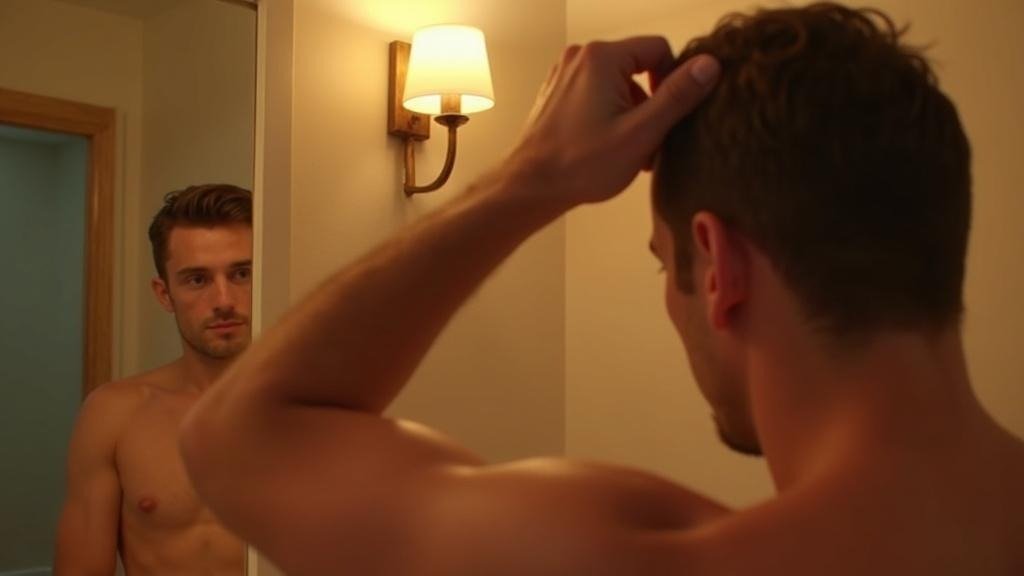
The supplement aisle for hair loss has changed more in the past two years than in the decade before. Biotin-only formulas are fading out. Consumers are asking harder questions. And a new category of AI-assisted self-assessment tools has made it easier to understand what stage of hair loss you are actually dealing with before spending money on anything.
This list covers the ten picks I would prioritize in 2026, from free analysis tools to evidence-backed treatments to targeted OTC supplements. Not everything here is a capsule in a bottle. That is intentional.
What I Looked At
- Evidence quality. Is there peer-reviewed data, or just marketing?
- Transparency. Does the brand state ingredients, doses, and realistic expectations?
- Access and cost. Can most people afford and reach this?
- Fit. Does it address the right stage of hair loss for the right person?
The List
1. HairLine AI (Free AI Norwood Staging Tool)
Before spending a dollar on supplements or prescriptions, knowing your actual hair loss stage changes everything. HairLine AI runs entirely in your browser, uses your webcam or a photo upload, and maps facial geometry through MediaPipe to classify your Norwood stage using Gemini 3 Pro. The output is a results dashboard showing your estimated stage, rough graft count, and ballpark transplant cost ranges. No account. No payment. No waiting room. It does not sell anything or prescribe anything, which is exactly why it earns the top spot here. It is a neutral, zero-friction starting point that helps you arrive at any consultation or product decision with actual context instead of guesswork. Treat the Norwood read as a useful guide, not a clinical diagnosis.
2. Generic Minoxidil 5% Topical (OTC)
Still the most widely used OTC hair loss treatment in the world. Applied twice daily to the scalp, minoxidil prolongs the anagen (growth) phase of hair follicles. Generic versions cost as little as $10 to $15 for a month’s supply at most pharmacies. Results take three to six months minimum and stop if you quit using it. Foam versions are easier to apply without dripping. This is the standard baseline for anyone in the early to mid Norwood range.
3. Hims Topical Finasteride + Minoxidil Combo
Hims is currently the only major telehealth brand offering topical finasteride as a standalone option. Their topical combo formula delivers both actives in one application, which some users find easier to stick with than juggling two separate products. Topical finasteride is designed to reduce systemic absorption compared to oral, though the long-term comparative data is still developing. Hims also offers oral finasteride and oral minoxidil for those whose clinicians prefer that route.
4. Keeps 3-Month Finasteride or Minoxidil Plans
Keeps is built specifically around hair loss, with no other health categories cluttering the experience. Their three-month supply plans bring the per-month cost down noticeably, and shipping runs around $5. They offer generic finasteride and minoxidil without the upsell noise. Good fit for someone who already has a diagnosis and just wants reliable refills.
5. Ketoconazole 2% Shampoo (Nizoral or Generic)
Ketoconazole is an antifungal that also has documented anti-androgenic effects on the scalp at the follicle level. Used two to three times per week alongside minoxidil, studies suggest it can meaningfully support hair density over time. The OTC 1% version is widely available; the 2% is prescription-strength but available affordably through several telehealth platforms.
6. Nutrafol Men’s (or Women’s)
Nutrafol is one of the few supplement brands that has published clinical data, including a randomized controlled trial showing improved hair growth versus placebo at six months. The active complex targets cortisol, DHT, and oxidative stress pathways together. At roughly $88 per month it is not cheap, but the formulation goes well beyond basic vitamins.
7. Saw Palmetto (Standardized Extract)
Saw palmetto inhibits 5-alpha reductase, the enzyme that converts testosterone to DHT, the main androgen tied to pattern hair loss. It is weaker than finasteride. But for someone who cannot or will not take a prescription, a standardized extract (85 to 95% fatty acids) at 320 mg daily has modest supporting evidence. Cost is low, roughly $15 to $25 per month.
8. Happy Head Custom Topical Compounds
Happy Head formulates prescription topical blends specific to each patient. They can combine finasteride, minoxidil, and other actives in a single compound, adjusted by a clinician. This is a good option for people who have already tried standard concentrations and want something dialed in closer to their specific response pattern.
9. Derma Rolling (1.5 mm, Weekly)
Not a supplement, but it earns a spot here. Controlled micro-needling of the scalp has shown in several small trials to improve minoxidil absorption and stimulate growth factors independently. A quality derma roller for scalp use runs $25 to $40. Used weekly on clean skin before minoxidil application, the results in combination studies were consistently better than minoxidil alone.
10. Keranique Scalp Stimulating Shampoo + Minoxidil System (Women)
Designed specifically for women experiencing diffuse thinning, Keranique’s system pairs a 2% minoxidil topical treatment with a keratin-based shampoo and conditioner. Women’s pattern hair loss often looks different from male pattern baldness, and most male-focused brands do a poor job addressing it. This is a dedicated women’s OTC system with years of market data behind it.
How to Choose
Start with a clear picture of your stage. That is what a tool like HairLine AI is actually for. From there, match the solution to the stage: early diffuse thinning responds differently than a receding hairline at Norwood 4. Supplements and topicals are often most effective in early stages. Prescription treatments like finasteride require a clinician, have real side effects in a small percentage of users, and must be continued indefinitely to hold results.
A quick note on realistic expectations: nothing on this list produces overnight changes. Most interventions require at least three months before any visible difference, and six months is closer to a fair evaluation window. Anyone promising faster results is overselling.
A word of caution before buying: this article is for general information only. Hair loss has multiple causes, including thyroid issues, nutritional deficiencies, and autoimmune conditions, and a dermatologist or licensed clinician should be your first stop for a real diagnosis. AI staging tools and OTC products do not replace that.
FAQ
Does Nutrafol actually work, or is it just expensive biotin?
Nutrafol is not a biotin supplement. It published a randomized controlled trial in the *Journal of Drugs in Dermatology* showing improved hair growth versus placebo at six months. The formula targets cortisol, DHT, and oxidative stress simultaneously. At $88 per month it is a real financial commitment, and results still take several months to appear.
Can you use saw palmetto and finasteride at the same time?
Both inhibit 5-alpha reductase, so combining them is theoretically redundant rather than additive. Most clinicians would not recommend stacking them. If you have access to finasteride through a platform like Hims or Keeps, it is the stronger, better-studied option. Saw palmetto is better suited as a standalone choice when prescription treatment is not possible or wanted.
How accurate is HairLine AI’s Norwood staging compared to a dermatologist?
HairLine AI uses photo-based geometry mapping and is a screening guide, not a clinical assessment. It is most useful for identifying whether you are in an early, mid, or advanced stage before a consultation. A dermatologist can assess scalp health, miniaturization patterns, and rule out non-androgenic causes that a photo-based tool will miss entirely.
Is topical finasteride from Hims meaningfully different from the oral pill?
The goal of topical delivery is to reduce systemic blood levels of finasteride while still acting on scalp follicles. Early data suggests lower systemic absorption, which may reduce the risk of systemic side effects. However, long-term head-to-head data comparing topical and oral finasteride for both efficacy and side effect profiles is still limited as of 2026.
At what Norwood stage do OTC supplements stop being enough?
There is no single cutoff, but most evidence for minoxidil and supplement-based approaches is strongest at Norwood 1 through 3. By Norwood 4 and beyond, follicle miniaturization is typically more advanced, and prescription treatments or a transplant consultation become more relevant. A tool like HairLine AI can help you identify roughly where you fall before deciding which category of intervention makes sense.
Sources
- Olsen EA et al., “A randomized clinical trial of 5% topical minoxidil versus 2% topical minoxidil and placebo in the treatment of androgenetic alopecia in men,” *Journal of the American Academy of Dermatology*, 2002
- Shapiro J, “Hair loss in women,” *New England Journal of Medicine*, 2007
- Marks LS et al., “Effects of a saw palmetto herbal blend in men with symptomatic benign prostatic hyperplasia,” *Journal of Urology*, 2000
- Suchonwanit P et al., “Minoxidil and its use in hair disorders: a review,” *Drug Design, Development and Therapy*, 2019
- Nutrafol clinical study summary, published via *Journal of Drugs in Dermatology*, 2018
- U.S. Food and Drug Administration, OTC minoxidil labeling guidance, FDA.gov